
Blog
How to Swap a JDM Engine Step-by-Step

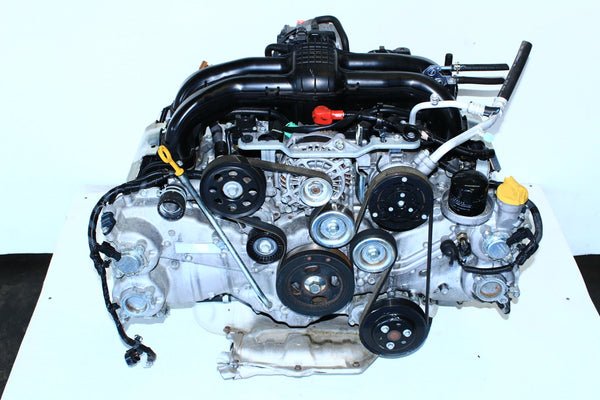
There is a distinct magic to the phrase “JDM Engine Swap.” For decades, car enthusiasts, weekend warriors, and professional builders have looked to the Japanese Domestic Market (JDM) to breathe new life into their chassis. Whether you are chasing higher horsepower, replacing a tired motor, or looking for the legendary reliability of low-mileage Japanese imports, a JDM swap is a rite of passage in the automotive tuning world.
But let’s be brutally honest: swapping an engine is not like changing your oil. It is a complex, knuckle-busting, mentally taxing process that requires patience, the right tools, and meticulous planning.
This comprehensive, 2,500-word step-by-step guide is designed to walk you through the entire process of how to swap a JDM engine. From sourcing the perfect powerplant to hearing it roar to life for the first time, we have you covered.
Phase 1: Planning, Research, and Sourcing
The success of your engine swap is determined weeks before you ever pick up a wrench. Poor planning leads to stranded project cars and blown budgets.
1. Choosing the Right JDM Engine
Your first step is deciding which engine fits your goals, your chassis, and your budget. Are you looking for a direct bolt-in replacement, or are you doing a custom cross-manufacturer swap that requires fabrication?
Here are some of the most legendary and sought-after JDM powerplants you might consider:
- The Golden Era Hondas: If you are building a classic Civic or CRX, the B-Series is the holy grail. Finding a pristine JDM Honda B16A for sale gives you that legendary high-revving VTEC experience. For those needing a bit more displacement and torque, upgrading to a complete Honda Integra 1.8L VTEC with a cable LSD 5-speed transmission (JDM B18C) will completely transform your track day experience.
- The Modern Honda Benchmark: The K-Series swap is the modern king of the tuner world. Engines like the JDM Honda CR-V K20A offer massive aftermarket support, modern architecture, and incredible naturally aspirated or turbocharged potential.
- Rear-Wheel Drive Legends: If you are restoring an S2000, you know how hard it is to find a healthy AP1 motor. Securing a genuine JDM Honda S2000 F20C engine is vital for maintaining the soul of the chassis. Meanwhile, AE86 Corolla builders will always covet the glorious sound of the 20-valve JDM 4AGE Blacktop.
- The 90s Supercar Powerplants: Restoring a heavy-hitting 90s halo car? You can’t compromise on power. Sourcing a robust, low-mileage JDM Mitsubishi 3000GT/GTO 6G72 Twin Turbo engine is often the only way to get these complex beasts back on the road reliably.
(Note: When sourcing engines, especially popular ones like the JDM Honda B16A, ensure you are buying from reputable importers who compression test their motors).
2. Legalities and Emissions Compliance
Before you spend a dime, check your local laws. In the United States, engine swaps are heavily regulated by the Environmental Protection Agency (EPA) and state bodies like the California Air Resources Board (CARB).
- The Golden Rule: Generally, the replacement engine must be the same year or newer than the chassis it is going into, and it must retain all original emissions equipment for that specific engine block.
3. Budgeting for the “Hidden” Costs
The cost of the engine is usually only 50% to 60% of the total swap cost. You must budget for:
- Engine Mounts (OEM or aftermarket polyurethane)
- Wiring Harness conversions or standalone ECUs
- Custom axles or driveshafts (for non-native swaps)
- Upgraded cooling systems (radiator, fans)
- Fluids, gaskets, belts, and maintenance items
Phase 2: Gathering Tools and Preparing the Workspace
You cannot perform a JDM engine swap with a basic household toolkit. You need proper automotive tools and a safe environment.
Essential Tools Checklist:
- Engine Hoist (Cherry Picker) and Engine Stand: Rated for at least 1-ton.
- Load Leveler: Absolutely crucial for adjusting the angle of the engine as you extract and insert it.
- High-Quality Jack and Jack Stands: Never work under a car supported only by a hydraulic jack. Look for standards approved by ASE (Automotive Service Excellence) safety guidelines.
- Comprehensive Metric Socket Set: 1/4″, 3/8″, and 1/2″ drives. You will need deep sockets, swivels, and extensions. Japanese cars are built entirely on the metric system (10mm, 12mm, 14mm, 17mm, and 19mm will be your best friends).
- Breaker Bar and Torque Wrench: For breaking loose stubborn axle nuts and properly torqueing internal engine components.
- Masking Tape and Sharpies: For labeling every single wire and vacuum line.
- Spill Containment: Drain pans, shop towels, and oil dry.
Pro-Tip: Take photos of your engine bay from multiple angles before you touch anything. When you are trying to remember how the alternator bracket was routed three weeks from now, those photos will save your sanity. Magazines like MotorTrend often highlight the importance of meticulous documentation in their project car builds.
Phase 3: The Teardown – Removing the Old Engine
This is the point of no return. Take a deep breath, put on your safety glasses, and let’s get dirty.
Step 1: Disconnect the Battery and Depressurize Fuel
Safety first. Disconnect the negative terminal of your battery, followed by the positive, and remove the battery from the bay completely. Next, relieve the fuel system pressure by removing the fuel pump fuse and cranking the engine a few times, or by using the Schrader valve on the fuel rail.
Step 2: Drain All Fluids
Place your catch pans underneath the vehicle. Drain the engine oil, the transmission fluid, and the engine coolant.
- Warning: Coolant is highly toxic to animals and the environment. Dispose of all fluids at a proper recycling facility.
Step 3: Remove the Hood and Clear the Path
Mark the position of the hood hinges with a marker so you can realign it perfectly later. Unbolt the hood and set it somewhere safe. Remove the air intake system, the battery tray, and the cooling fans. Next, carefully remove the radiator. This provides crucial clearance for pulling the motor forward.
Step 4: Disconnect the Wiring Harness and ECU
This is where people make the most mistakes. Carefully unplug the main engine harness from the ECU (usually located in the passenger footwell). Push the harness through the firewall into the engine bay.
- Label Everything: Use your masking tape and sharpie. Label the injector clips, the TPS sensor, the MAP sensor, the alternator plug, and the starter trigger. Do not rely on your memory.
Step 5: Disconnect the Plumbing
Disconnect the upper and lower radiator hoses, heater core hoses, and fuel lines.
- Power Steering and A/C: If your car has air conditioning and power steering, try to unbolt the A/C compressor and power steering pump from the engine block and secure them to the side of the engine bay with zip ties or bungee cords. This allows you to remove the engine without venting the refrigerant into the atmosphere or spilling power steering fluid everywhere.
Step 6: Disconnect the Drivetrain and Exhaust
Unbolt the exhaust manifold or downpipe from the rest of the exhaust system. Next, safely raise the car on jack stands. Disconnect the shift linkage or shift cables from the transmission. For front-wheel-drive cars, you will need to remove the front wheels, unbolt the lower ball joints, and pull the CV axles out of the transmission. For rear-wheel-drive cars, unbolt the driveshaft from the transmission tail housing.
Step 7: Support the Engine and Remove the Mounts
Bring in the engine hoist and attach the chains to the designated factory lift points on the engine block. Put slight upward tension on the hoist to support the engine’s weight. Carefully unbolt the engine and transmission mounts. The engine is now entirely supported by the hoist.
Step 8: The Extraction
Slowly pump the hoist to lift the engine. You will need to constantly adjust the load leveler to angle the transmission down or up to clear the frame rails and firewall. Go slowly. Check all sides repeatedly to ensure you haven’t forgotten a ground strap or fuel line. Once clear, roll the hoist back and safely lower the old engine onto a tire or engine stand.
Phase 4: Prepping the JDM Engine
Do not drop your new JDM engine straight into the car! JDM engines often sit in warehouses in Japan for months or years. Doing “while-it’s-out” maintenance is the most crucial step of this entire guide.
The Mandatory Maintenance Checklist
Working on an engine while it is on a stand takes minutes; doing the same work while it is cramped in an engine bay takes hours.
- Timing Belt and Water Pump: Rubber timing belts degrade over time, regardless of mileage. If this belt snaps on an interference engine, your new JDM motor is instantly destroyed. Replace the belt, the tensioners, and the water pump.
- Gaskets and Seals: Replace the valve cover gasket, the oil pan gasket, and most importantly, the Rear Main Seal. You do not want to put the whole car back together only to find oil leaking between the engine and transmission.
- Spark Plugs and Wires: Install fresh NGK or Denso plugs.
- Clutch and Flywheel: If you have a manual transmission, now is the time to install a new clutch kit and have the flywheel resurfaced. Aligning the clutch with a proper alignment tool is infinitely easier outside the car.
Swap Over USDM Parts (If Necessary)
Japanese domestic market engines often use different sensors, distributors, or intake manifolds than their US Domestic Market (USDM) counterparts due to different emissions standards.
- The ECU Dilemma: JDM ECUs are often tuned for higher octane fuel (Japan’s premium fuel is roughly equivalent to 98-100 octane). Furthermore, JDM ECUs usually do not look for emissions equipment like EGR valves or secondary O2 sensors.
- The Fix: You may need to swap your old USDM intake manifold, distributor, and sensors onto the JDM block so your original ECU can run it without throwing Check Engine Lights (CEL). Alternatively, if local laws permit, you can use a conversion harness to run the JDM ECU.
Phase 5: The Installation – Dropping in the JDM Heart
With your new JDM engine fully refreshed, resealed, and prepped, it is time for the marriage between chassis and powertrain.
Step 9: Positioning the Engine
Attach the load leveler and chains to your prepped JDM engine. Hoist it up and slowly roll it over the engine bay. Lowering the engine is a two-person job. One person should operate the hoist release valve (very slowly) while the other person physically guides the engine, ensuring the transmission clears the steering rack and the pulleys clear the frame rails.
Step 10: Aligning and Bolting the Mounts
This is often the most frustrating part of the swap. Engines rarely line up perfectly on the first try.
- Pro-Tip: Do not tighten any engine mount bolts until all of the mounts have a bolt threaded through them. Leave them loose. You will need the engine to shift and wiggle slightly to get all the bolts lined up. Once all bolts are in place, torque them down to factory specifications.
Step 11: Reconnecting the Drivetrain
With the engine secure, slide under the car. Reinsert the CV axles into the transmission (until you hear the C-clip “pop” into place) or re-bolt the RWD driveshaft. Reconnect your shift linkage, ensuring all cotter pins or retaining clips are securely fastened. Re-torque your suspension components if you had to disassemble them.
Step 12: Hooking Up the Plumbing
Reinstall the radiator and reconnect the upper and lower radiator hoses. Reconnect the heater core hoses at the firewall. Bolt the A/C compressor and Power Steering pump back onto the engine block and re-tension their respective drive belts. Reconnect your high-pressure and return fuel lines, double-checking the tightness to prevent catastrophic fire hazards.
Step 13: Wiring and Electrical
Carefully route the engine wiring harness back to its original position. Plug in every sensor, referring to your masking tape labels. Reconnect the main engine grounds—bad grounds are the #1 cause of post-swap engine issues. Ensure the transmission ground, the valve cover ground, and the thermostat housing grounds are bolted to bare, clean metal. Finally, push the main ECU plugs back through the firewall and connect them to your Engine Control Unit.
Step 14: Reinstall Accessories
Bolt the exhaust manifold/header back onto the engine and connect it to your mid-pipe. Reinstall the air intake system, the cooling fans, and finally, drop the battery back into its tray.
Phase 6: Fluids, The Vital First Start, and Break-in
You are at the finish line, but rushing this final phase can ruin all your hard work.
Step 15: Fluid Fill and Double Check
- Oil: Fill the engine with the manufacturer-recommended weight of high-quality conventional oil (save the synthetic for after the break-in).
- Coolant: Fill the radiator with a 50/50 mix of antifreeze and distilled water. Leave the radiator cap off for now.
- Transmission Fluid: Fill the transmission until fluid begins to weep from the fill hole.
- The Once-Over: Grab a flashlight. Look closely at every fuel fitting, every coolant hose clamp, and every electrical plug. Check underneath the car for any immediate puddles.
Step 16: Priming the Engine
Because the engine has been sitting dry, you need to build oil pressure before the engine actually starts.
- Remove the spark plug wires (or unplug the coil packs).
- Remove the EFI/Fuel Pump fuse so the engine gets no fuel.
- Turn the key and crank the engine for 10-15 seconds. Wait a minute for the starter to cool down, and do it again. Look at your dashboard; if your oil pressure light goes out, you have successfully primed the oil system.
Step 17: The First Start
Reinstall the spark plug wires and the fuel pump fuse. Reconnect the negative battery terminal. Turn the key to the “ON” position (do not crank yet). Listen for the fuel pump to prime (a faint humming noise from the rear of the car). Check the engine bay for any spraying fuel.
If everything looks dry, turn the key and crank it.
It may take a few seconds of cranking for fuel to reach the injectors. When it fires up, do not rev the engine! Let it idle. It will likely smoke a little bit as oils and fingerprints burn off the exhaust manifold—this is normal.
Step 18: Bleeding the Cooling System and Checking for Leaks
While the engine is idling, keep an eye on the temperature gauge. With the radiator cap still off, you will see bubbles escaping from the coolant as the system bleeds out trapped air. Turn the car’s interior heater to the maximum “HOT” setting; this opens the heater core valve and bleeds that circuit as well.
Keep a flashlight moving around the engine bay. Look for dripping oil, weeping coolant, or fuel leaks. Listen for exhaust leaks or the dreaded “vacuum hiss” which indicates an unplugged vacuum line. Once the cooling fans cycle on and off automatically, top off the radiator and put the cap on.
Step 19: The Break-In Period
Even though this is a used JDM engine, treat it gently for the first 500 miles. You have installed new gaskets, a new timing belt, and likely a new clutch.
- Vary your RPMs; do not sit at a constant highway speed for hours.
- Avoid wide-open throttle (WOT) pulls.
- Do not engage VTEC or hit full turbo boost until the break-in is complete. After 500 miles, change the engine oil and filter again to flush out any debris that may have been dislodged during shipping or installation. Double-check the torque on your engine mounts and suspension bolts.
Conclusion
Swapping a JDM engine into your project car is one of the most rewarding experiences a gearhead can undertake. It tests your mechanical aptitude, your problem-solving skills, and your patience. But the moment you drop the clutch and feel the surge of a healthy, low-mileage Japanese powerplant pulling you down the road, every scraped knuckle and late night in the garage becomes entirely worth it.
Remember, the key to a successful swap lies in the preparation. Source your engine from reputable vendors, invest in the right tools, replace the crucial maintenance items while the engine is on the stand, and double-check your wiring. Work methodically, follow this step-by-step guide, and soon enough, your project car will be back on the street, better and faster than ever before.